
Targeted metal roof repairs
When damage is localized, repairs may focus on replacing compromised fasteners, sealing small coating breaches, and correcting flashing issues at edges and penetrations.
Serving Fort Worth, Texas & surrounding areas
24/7 Response • Answered live
One call instead of ten No web forms, no callback spam Booking Fall & Winter 2026
Hail Damage Service · Fort Worth, TX
Get a clear assessment after the storm, photos of what matters, and a repair plan that protects panels, fasteners, and seams before small impacts turn into leaks.
✓ Skip the 3-hour Google rabbit hole — we’ve already done the vetting
✓ One conversation, not ten voicemails and seven web forms
✓ 24/7 response — talk to a real person who actually knows Fort Worth metal roofing
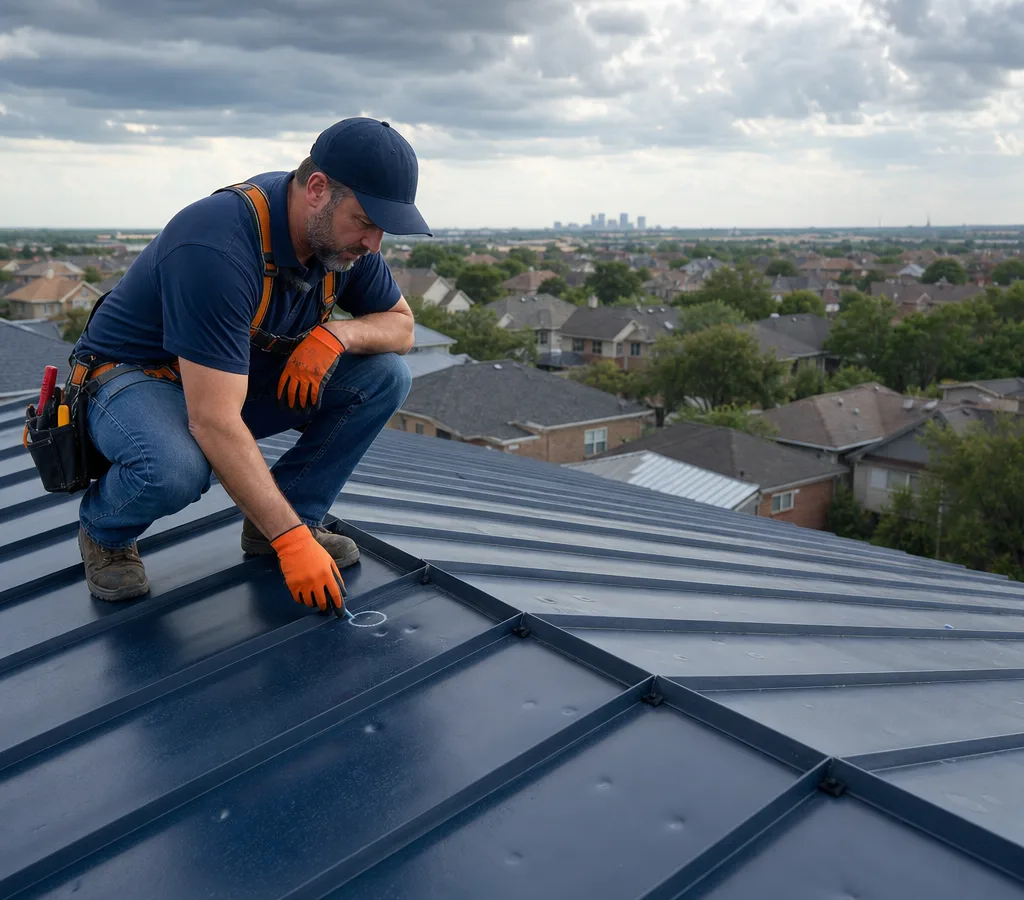
Panel, seam, and impact-point inspection
Cosmetic dents or functional damage
If you are searching for metal roof hail damage Fort Worth TX help, you are usually dealing with one of two problems: cosmetic dents that change the look of the roof, or functional damage that can lead to leaks over time. Functional damage is not always obvious from the ground, and it often appears first at seams, ribs, fasteners, and penetrations.
In Fort Worth, hail events can be intense and short. Concentrated impact may cause panel dimpling, scuffed coatings, displaced closure strips at the eave, or compromised sealant at pipe boots and skylight curbs. A loosened fastener, distorted seam, or cracked washer can become a leak path during the next wind-driven rain.
Metal Roofing Fort Worth TX starts by documenting the damage, determining whether it is cosmetic or functional, and recommending the smallest scope that reliably restores weather-tightness.
Evidence at the roof-system details
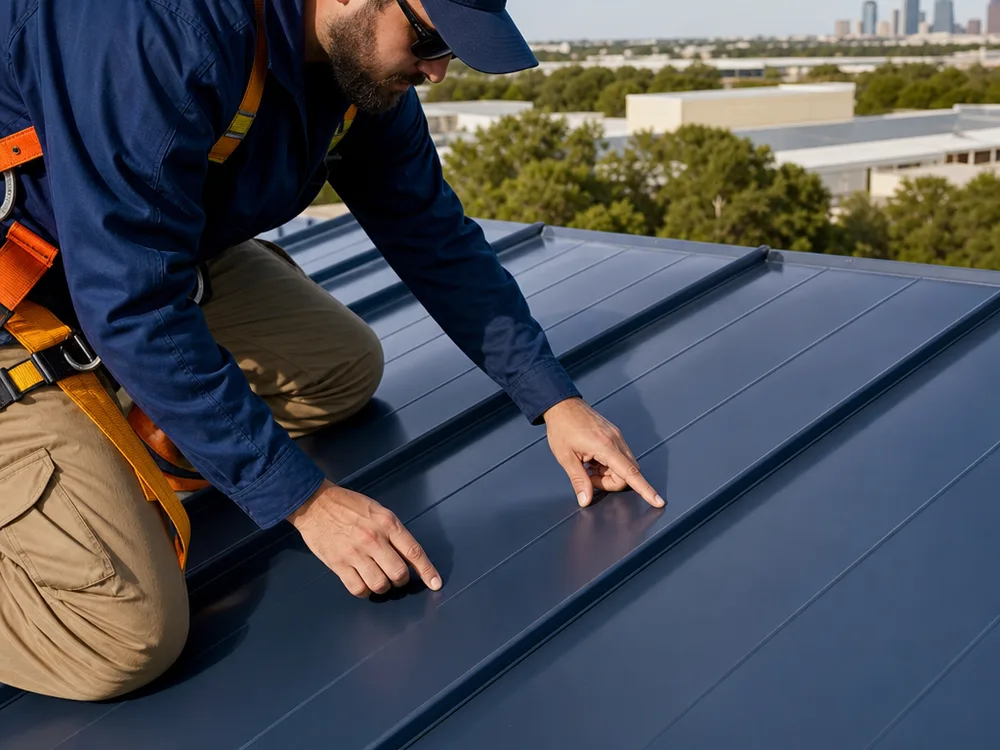
A proper hail inspection is more than counting dents. We look for failure points that change how the roof sheds water and expands and contracts day to day.
Common indicators of functional metal roof hail damage include:
Because many Fort Worth homes have mixed roof geometry, we document each slope separately and note where hail is most concentrated. You receive photos and plain-language notes so decisions are based on evidence, not guesswork.
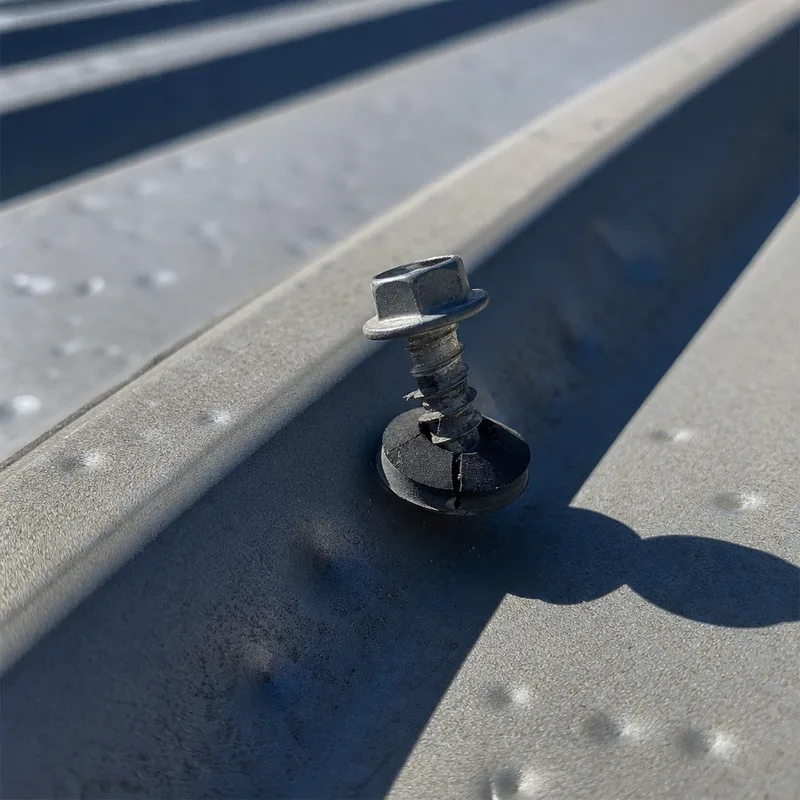
Backed-out fastener and compromised washer
Match the correction to the damage
When damage is localized, repairs may focus on replacing compromised fasteners, sealing small coating breaches, and correcting flashing issues at edges and penetrations.
If one slope took the brunt of the hail, swapping affected panels can restore appearance and performance without disturbing undamaged areas.
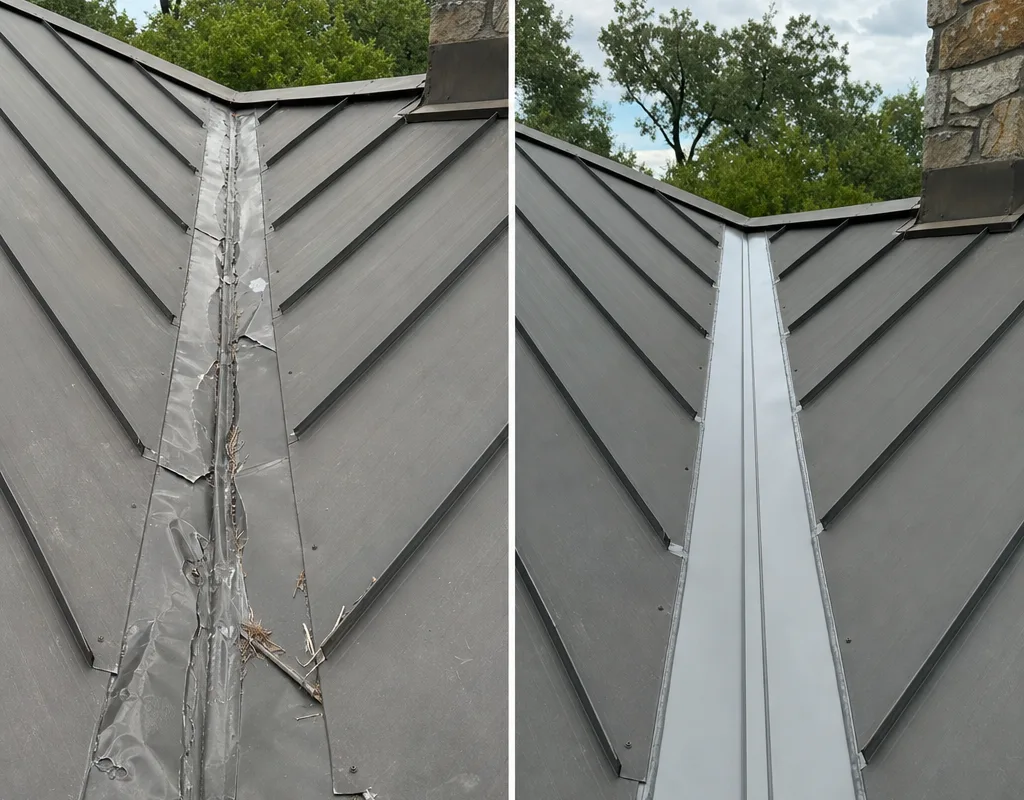
Pipe boots, curb flashings, and transition metal are common leak sources after impact. Reworking these details often provides the biggest reliability gain.
Metal roofs rely on protective finishes. Repairs should not leave raw edges or use incompatible sealants that shorten service life.
When seam integrity, widespread fastener failure, or systemic detail issues occur across the roof, replacement can be the most dependable path forward.
Inspection to corrective work
We inspect panels, seams, fasteners, flashings, and penetrations. You receive photo documentation of the areas that drive the scope.
We explain which findings affect water-shedding and long-term performance versus dents that are mainly aesthetic, so you can prioritize correctly.
We outline the recommended work and reasonable alternatives, including what each option solves and what it leaves in place.
Work focuses on the weak points hail exposes: fasteners, seam condition, edges, and penetrations. We finish by verifying repaired areas are tight and properly sealed.
Repair investment factors
Most metal roof hail damage repair in Fort Worth typically ranges from about $450 to $1,800 for small corrective work such as fasteners, minor flashing fixes, and isolated sealing. Partial panel replacement often runs $1,500 to $6,000+. Many full replacement projects land in the $10,000 to $30,000+ range depending on roof size, panel type, and complexity.
Price changes with access and pitch, the metal profile, the number of penetrations and edge details requiring rebuild, and whether the damage is cosmetic or functional. Exact cost is confirmed after an on-roof inspection and written scope.
Safe first steps after the storm
Photograph what you can safely see. Ground photos of each slope and any downspouts or gutters help establish what happened before a roof inspection.
Avoid quick patching with random materials. Some caulks and roof cements do not bond well to metal finishes and can create bigger problems at seams and fasteners.
Watch for interior signals. New water stains near exterior walls, chimneys, or mechanical chases often track back to flashing or a penetration.
Get an inspection focused on details, not just dents. On metal systems, many post-hail leaks start at edges, transitions, and penetrations.
If impacts are widespread and you are weighing a larger scope, the first step remains the same: document the damage and confirm whether the system is functionally compromised.
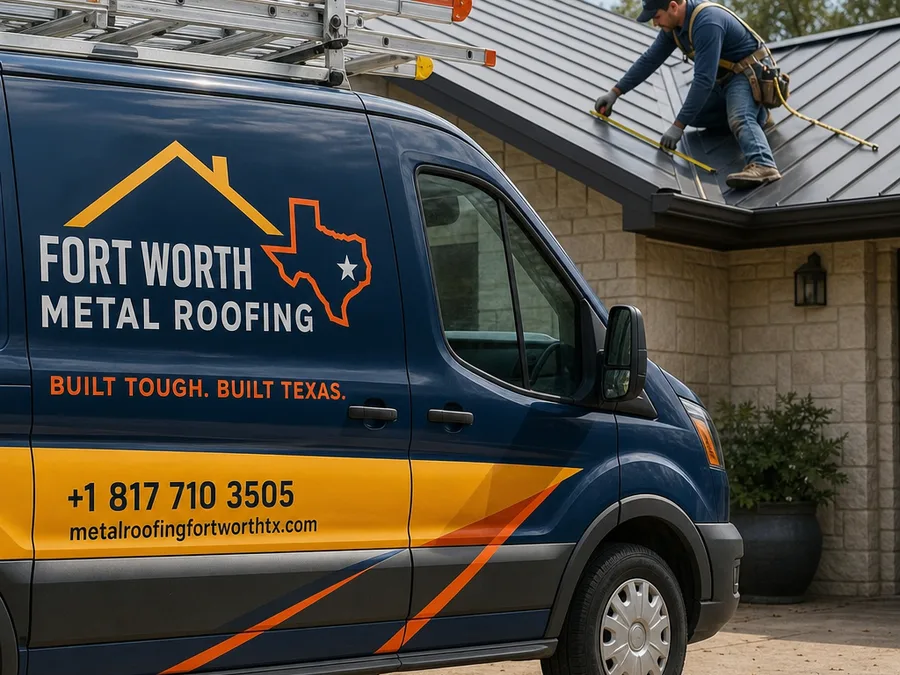
Damage documentation in focus
Practical answers after the storm
No, many hail dents on metal panels are cosmetic, but functional damage often shows up at seams, fasteners, and flashings where water can get in. A focused inspection checks seam engagement, backed-out screws and washers, and stressed sealant at penetrations to confirm whether the roof is still weather-tight.
Schedule an inspection as soon as conditions are safe because loose fasteners and damaged flashings can start leaking with the next wind-driven rain. Early documentation also helps separate storm damage from older wear so the repair scope stays accurate.
Many roofs can be repaired by replacing damaged panels on one slope or addressing details such as valleys and pipe boots, but it depends on the metal profile and assembly. Standing seam systems may require careful disassembly to replace a panel without compromising adjacent seams, so the best option is determined on the roof.
Fasteners and washers on exposed-fastener systems, seam locks on standing seam, and flashings at eaves, rakes, valleys, and penetrations are common functional weak points. Hail can distort metal or crack sealant at these details, creating water paths even when field panels look acceptable.
Coverage depends on your policy and whether damage is considered cosmetic or functional. Insurers often want clear documentation of what changed and where. Photo evidence and a written scope distinguishing dents from performance issues can support an informed claim decision.
Small corrective repairs may be completed in a single visit, while panel replacement or rebuilding multiple flashings can take longer depending on material availability and weather. After inspection, the schedule can be based on roof type, access, and the number of areas requiring work.
Document the damage before deciding
Tell us what you are seeing and when the storm hit. We will inspect the roof, document the findings with photos, and lay out repair and replacement options that fit your metal system.