
Panel and profile selection
Standing seam and through-fastened panels behave differently in gusts. We match the profile and gauge options to roof geometry, slope, and the attachment strategy needed for uplift resistance.
Serving Fort Worth, Texas & surrounding areas
24/7 Response • Answered live
One call instead of ten No web forms, no callback spam Booking Fall & Winter 2026
Wind-Performance Roofing · Fort Worth, TX
Get a roof system built for North Texas gusts: tested panel profiles, the right underlayment, and fastening patterns that match your deck and geometry before the first panel goes on.
✓ Skip the 3-hour Google rabbit hole — we’ve already done the vetting
✓ One conversation, not ten voicemails and seven web forms
✓ 24/7 response — talk to a real person who actually knows Fort Worth metal roofing
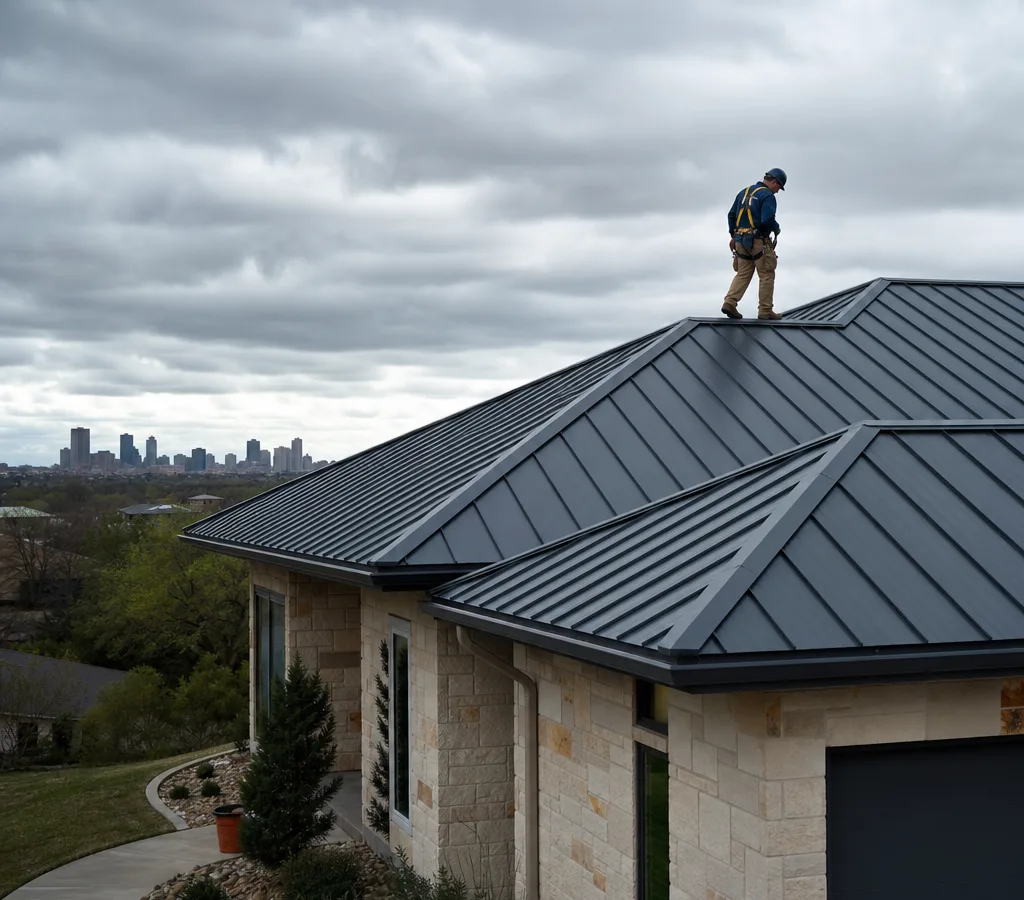
Standing-seam geometry prepared for North Texas winds
Whole-assembly resistance
Metal roofing wind performance in Fort Worth comes down to one thing: the entire roof assembly resisting uplift when storm gusts try to peel panels and edges away from the deck. The panel you see is only part of it. Wind performance is affected by the deck condition, underlayment choice, clip or screw type, fastener spacing, edge metal, and how ridges, hips, and valleys are tied together.
Fort Worth's straight-line winds and thunderstorm outflows can punish weak points first. Wind damage often starts at eaves and rakes, at ridge terminations, and around penetrations. If the system is not designed and installed as a system, a roof can look great on day one and still be vulnerable at the perimeter.
Metal Roofing Fort Worth TX focuses on rated assemblies and installation details that match local exposure, roof shape, and substrate. If you are comparing quotes, ask each contractor to explain in writing the panel type, attachment method, perimeter detailing, and how those choices support wind resistance for your specific roof.
Load paths and vulnerable edges
A wind-resistant metal roof is built around load paths. Uplift loads transfer from the panel to clips or screws, into the deck, and down into the structure. Problems happen when any link is weak or mismatched.
Common wind-related failure points we look for during an inspection in Fort Worth:
We tailor recommendations to what is actually on your home, whether that is a newer build near Alliance with long ridge runs and multiple penetrations, or an older roof deck closer to Fairmount where repairs and re-fastening can change the scope.
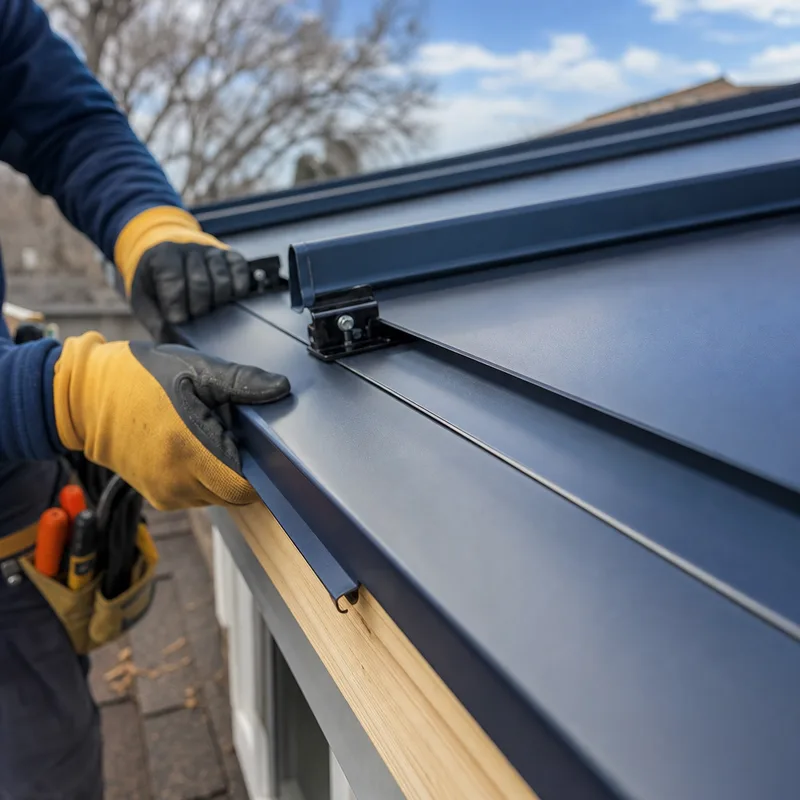
Clip spacing, deck attachment, and eave load path
Wind resistance by design
Standing seam and through-fastened panels behave differently in gusts. We match the profile and gauge options to roof geometry, slope, and the attachment strategy needed for uplift resistance.
Wind performance is sensitive to clip type, clip spacing, screw diameter, and washer quality. We base fastening patterns on the roof's layout, not on a one-size template.
Corners and edges see the highest uplift. We pay extra attention to drip edge, rake trim, fascia interfaces, and how the first and last panels are anchored.
Even when panels hold, wind-driven rain can exploit weak underlayment laps or penetrations. We specify underlayment that fits the roof type and temperature swings common in North Texas.
Plumbing vents, attic vents, skylights, and wall tie-ins are frequent leak points after wind events. We use purpose-made flashings and mechanically secure terminations where appropriate.
We verify deck fastening, alignment, seaming or torque, and trim attachment as the work progresses, because most wind problems are created by small install misses that are hard to spot later.
Roof-specific evaluation
Every roof has its own wind story. Two homes on the same street can behave differently because of roof shape, overhangs, attached structures, and how the roof is tied into walls and fascia.
During an on-site evaluation, we typically document:
You will get a clear scope that spells out the proposed panel system, how it will be attached, and what we will do at edges, corners, and transitions. We can also compare metal roofing options before narrowing the plan to a wind-rated assembly for your home.
Inspection through documentation
We review roof geometry, deck condition, penetrations, and existing edge details. If storm damage is present, we note the likely entry points for wind-driven rain and uplift.
We recommend a rated assembly approach: panel type, attachment method, underlayment, and perimeter detailing. The scope spells out what changes at edges, corners, ridges, and wall transitions.
We correct deck issues that can compromise fastener holding power. Proper substrate preparation is a major driver of wind performance, especially on older structures.
We install panels and trim with attention to fastening patterns and terminations. Alignment, seaming, and flashing work are checked as we go so details do not get buried.
We confirm critical areas like eaves, rakes, ridges, valleys, and penetrations, and review basic maintenance that helps keep fasteners, sealants, and trim performing through seasonal cycles.
Planning your wind-performance investment
Most Fort Worth metal roof projects designed around strong wind performance typically range from about $12 to $22+ per square foot installed, with simpler through-fastened profiles often landing lower and standing seam systems with upgraded perimeter detailing landing higher. Your price moves with roof size and pitch, tear-off needs, deck repair, the number of hips, valleys, and penetrations, and the specific attachment and edge-metal details required. The exact cost is confirmed after an on-site inspection and a written scope for your roof.
📞 Fort Worth • 24/7 ResponseFort Worth homeowner experiences
“We went with standing seam because we wanted better wind performance. The estimate explained clip spacing and edge details in plain language, and the crew was meticulous around the rakes and ridge. After the last big storm, everything stayed tight and quiet.”
“Our old roof always had trouble at the eaves in high winds. The new metal system has solid edge metal and the flashing work looks purpose-built, not improvised. The walk-through at the end helped us understand what to watch over time.”
Practical answers before inspection
Standing seam often performs very well in high winds because the fasteners are concealed and the panels are held with clips, but performance depends on the tested assembly and the installation details. In Fort Worth, the difference is usually decided by clip type and spacing, edge detailing, and how ridges and transitions are terminated, not by the label alone.
Perimeter edges and terminations usually fail first because wind suction is higher at corners, eaves, and rakes than in the field of the roof. That is why drip edge, rake trim, ridge caps, closures, and the fastening pattern near edges deserve more attention than the middle of the roof.
Sometimes, yes, if the panels are in good shape and the weaknesses are isolated to edges, fasteners, or specific transitions. In many Fort Worth cases, targeted re-fastening, replacing failed washers, upgrading edge metal, or rebuilding problem flashings can improve wind resistance, but we only recommend it after confirming the deck and attachment are sound.
It can, as long as the system includes the right underlayment strategy and properly detailed penetrations and terminations. Wind-driven rain often gets in at ridges, wall transitions, and around vents, so the flashing plan and underlayment laps are as important as the panels.
Many residential projects take several days to a couple of weeks depending on roof size, complexity, tear-off requirements, and whether deck repairs are needed. Complex roofs with lots of hips, valleys, and penetrations take longer because wind-resistance details at transitions are labor-heavy and should not be rushed.
Ask for the panel type and profile, the attachment method (clips or exposed fasteners), fastener or clip spacing assumptions, the underlayment type, and exactly how eaves, rakes, and ridges will be detailed. A good Fort Worth proposal explains perimeter handling and penetrations in writing, because those are the areas most tied to wind performance.
Plan for uplift before panels are ordered
Tell us what you are seeing and what you want to improve. We will inspect the roof, identify the weak points that matter in high winds, and provide a written scope for a metal roofing system built for Fort Worth storms.