
Hidden fasteners
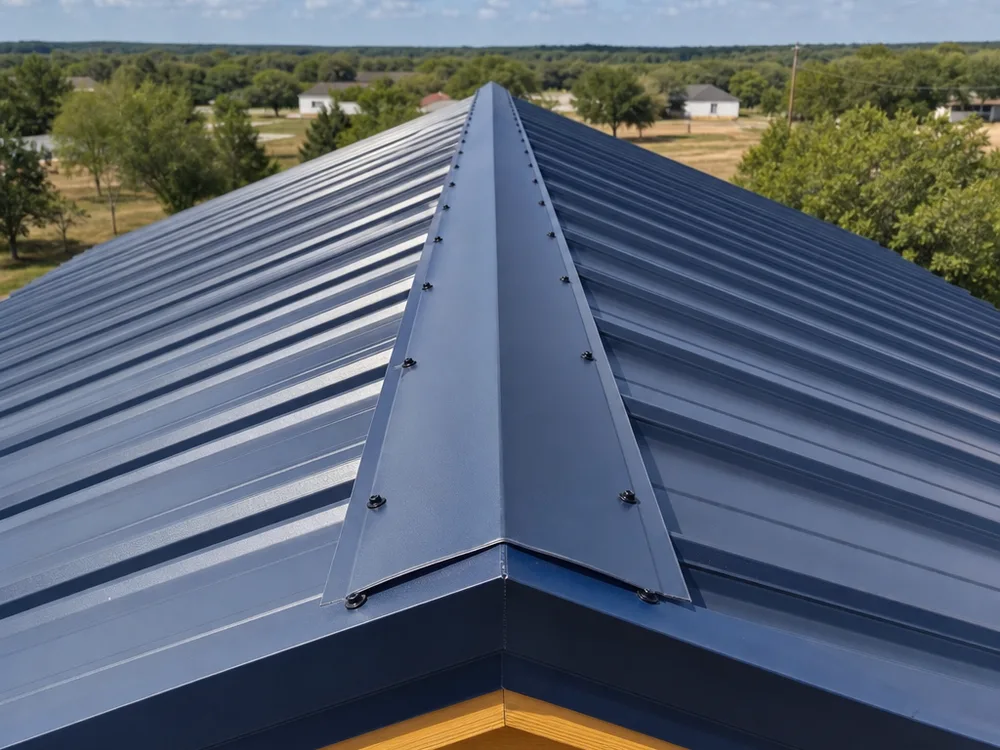
The panel field does not depend on rows of exposed screws and rubber washers. Fewer exposed points means fewer routine re-tightening and washer-aging issues.
Serving Fort Worth, Texas & surrounding areas
24/7 Response • Answered live
One call instead of ten No web forms, no callback spam Booking Fall & Winter 2026
Standing Seam Roofing · Fort Worth, TX
Get clean roof lines, hidden fasteners, and a long-wearing system built for North Texas heat, hail, and high winds. We inspect your roof, confirm the best panel and gauge, and provide a written scope you can compare.
✓ Skip the 3-hour Google rabbit hole — we’ve already done the vetting
✓ One conversation, not ten voicemails and seven web forms
✓ 24/7 response — talk to a real person who actually knows Fort Worth metal roofing
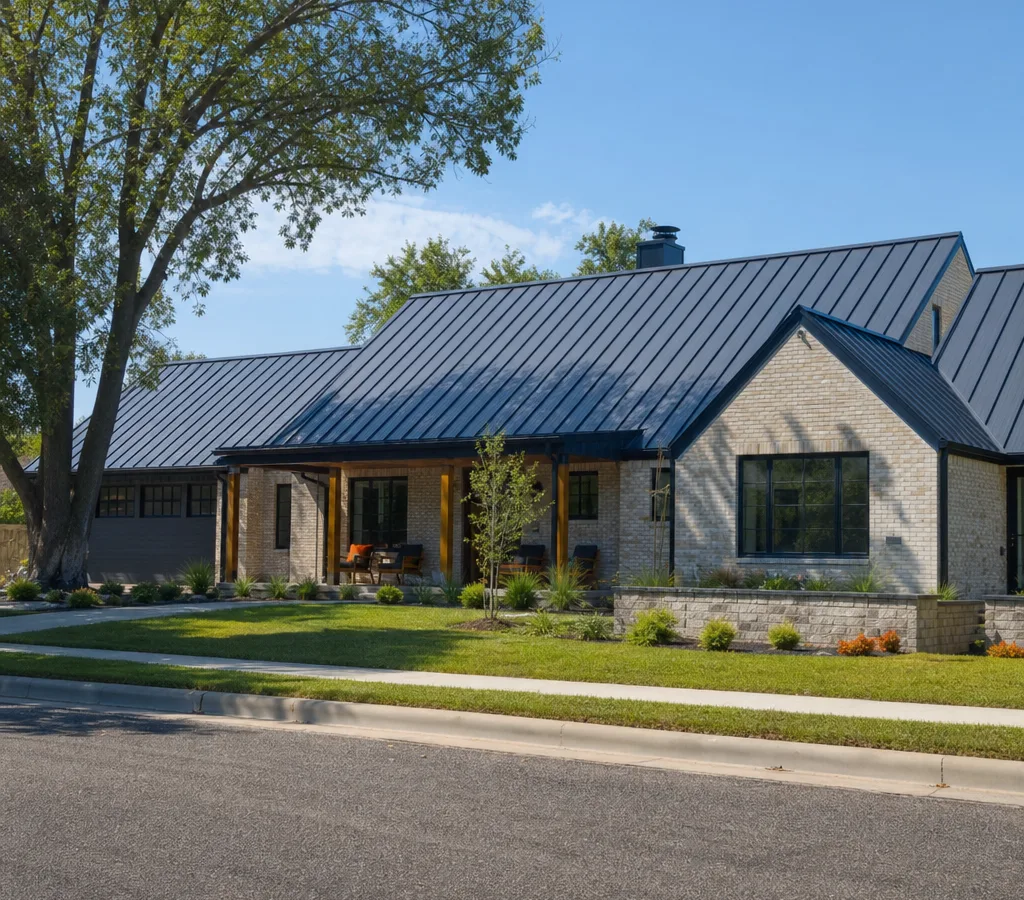
Crisp seams with coordinated eave and rake trim
Concealed-fastener performance
If you are searching for standing seam metal roofing Fort Worth TX, you are usually looking for a roof that stays tight, looks sharp, and does not rely on exposed screws across the field of the roof.
Standing seam is a panel system where the fasteners are concealed under the seams—the raised ribs running from eave to ridge. That design matters in Fort Worth because roof surfaces cycle hard in the sun, cool quickly, and face storms with wind-driven rain. A properly detailed system manages expansion and contraction, keeps penetrations watertight, and reduces maintenance points compared with exposed-fastener metal.
Metal Roofing Fort Worth TX installs standing seam systems for residential and light commercial buildings across Fort Worth, TX 76102 and nearby areas. The goal is a roof assembly that sheds water cleanly, vents correctly, and is flashed properly at every transition.
Specify the complete system
Standing seam is not one single product. The right system depends on roof slope, panel length, desired look, and roof geometry.
Panel profile and seam type. Common options include snap-lock and mechanically seamed profiles. Mechanically seamed systems are often selected for lower slopes or higher exposure because the seam is crimped closed.
Steel versus aluminum. Both are used in Texas. Selection depends on budget, finish options, and whether corrosion exposure is a concern.
Gauge, finish, and color. Thicker gauges cost more but can feel stiffer on longer runs. Quality factory finishes, often PVDF on premium color lines, help color hold up under strong sun.
Underlayment and ventilation. A standing seam roof still depends on the layers underneath. We confirm intake and exhaust ventilation and choose underlayment appropriate for heat and storm exposure.
Trim, valleys, and penetrations. Chimneys, skylights, plumbing vents, and HVAC curbs are where craftsmanship shows. We use purpose-made flashings and closure details instead of field improvisation.
Older Fort Worth neighborhoods often have mixed roof shapes and additions. Complex hips, dormers, and tie-ins require more labor and custom trim than a simple gable roof, which can significantly affect installation time.
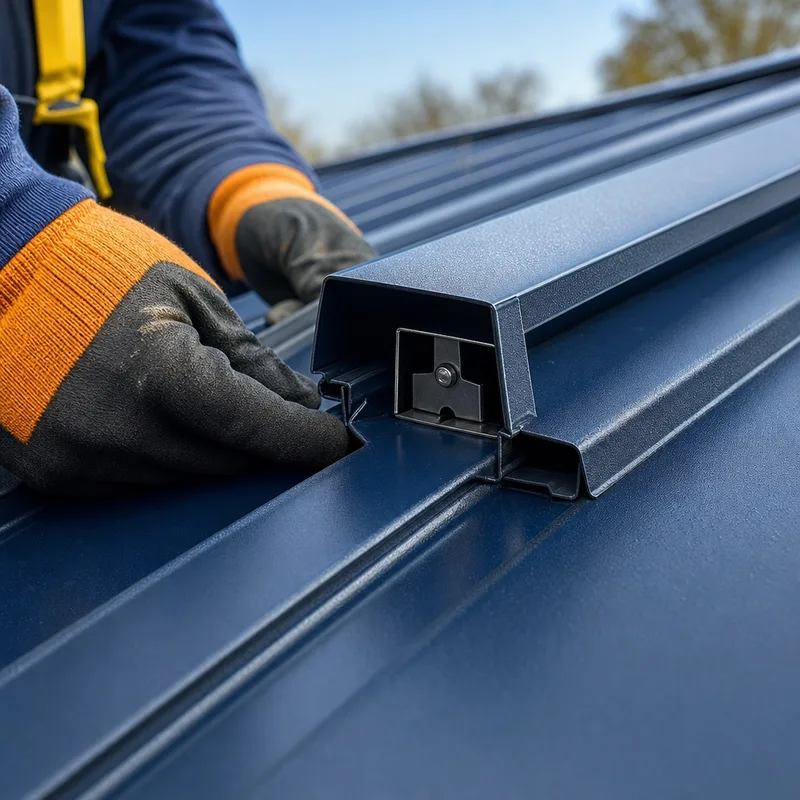
Concealed clips, formed seams, and coordinated trim
Long-term roof value
The panel field does not depend on rows of exposed screws and rubber washers. Fewer exposed points means fewer routine re-tightening and washer-aging issues.
Standing seam reads crisp from the street. It pairs well with brick homes, modern builds, and updated exteriors where you want a precise look.
Fort Worth sees hail and strong wind events. Properly installed panels, trim, and locking seams help the roof stay secure when weather turns.
Most upkeep is periodic visual checks and keeping valleys and gutters clear, not chasing widespread fastener issues across the roof plane.
We focus on valleys, sidewalls, chimneys, and penetrations. Water control is mostly about flashing and sequencing, not panel marketing.
Inspection to final review
We confirm roof slope, decking condition, existing layers, drainage paths, and problem areas such as soft decking, failing flashing, or past leak points.
You get a clear scope covering panel type, underlayment, ventilation, trim and flashing details, and treatment of penetrations.
If removal is needed, we plan protection for landscaping and access points. If a recover is appropriate, we confirm the conditions that make it viable and code-compliant.
We prep the deck, install underlayment and water protection where needed, then lay out panels for straight lines and consistent spacing. Clips and fasteners are installed to specification for movement and uplift.
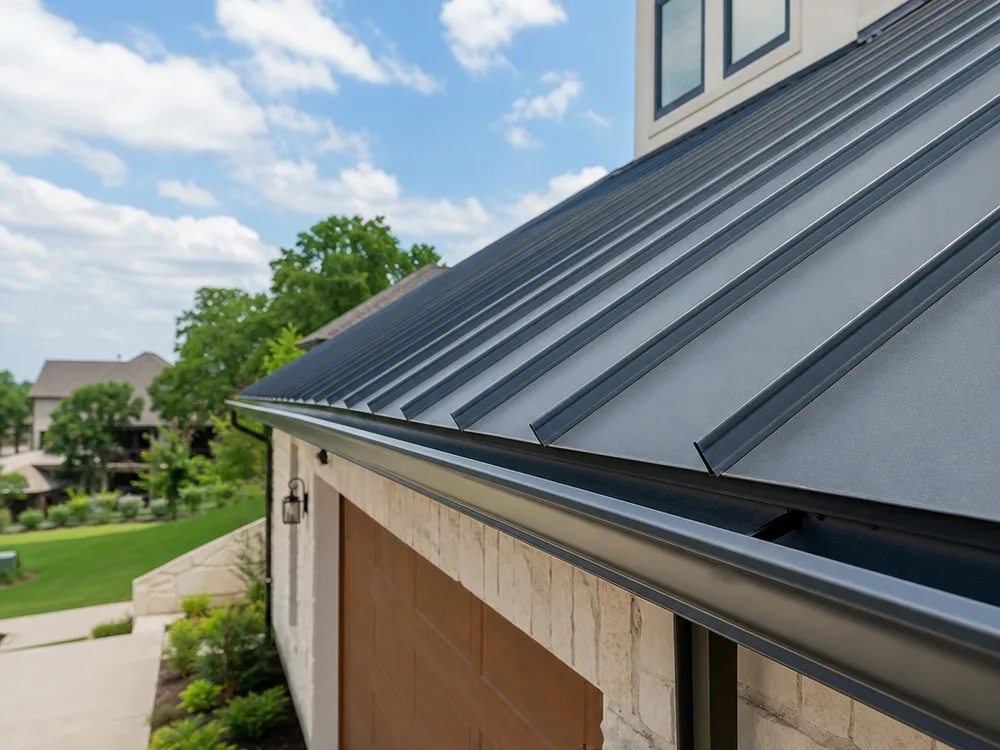
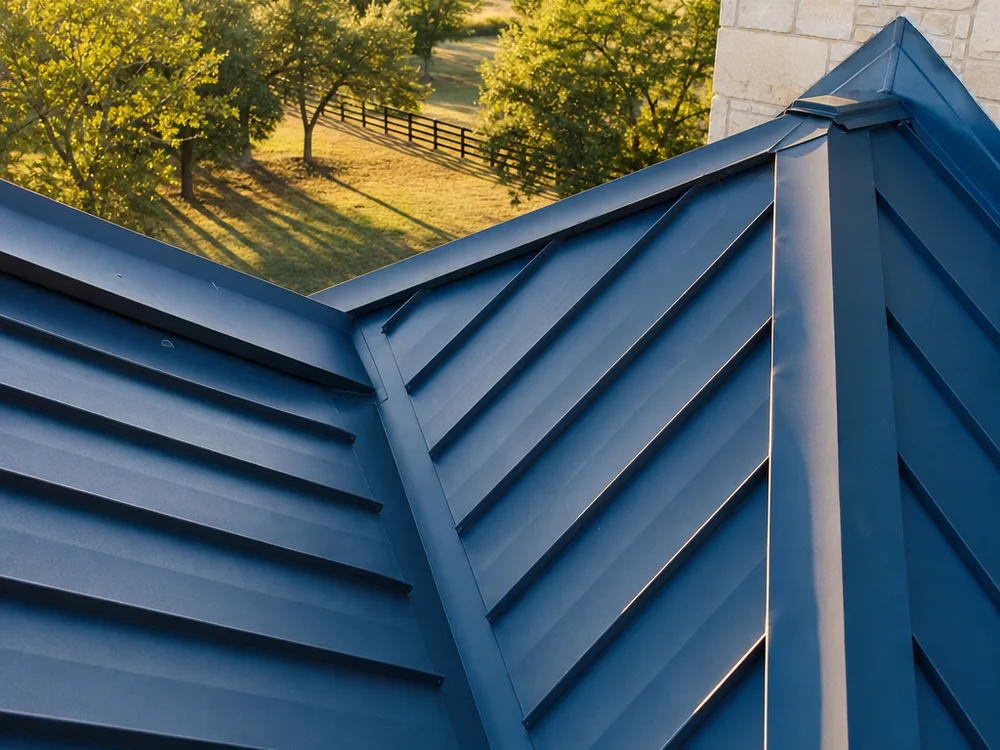
We install ridge and hip caps, eave and rake trim, valleys, and wall flashing with proper closures. We finish with a walkthrough and review maintenance basics.
Inspection-based pricing
Standing seam metal roofing in Fort Worth typically runs about $12 to $20+ per square foot installed for many homes, with complex roofs, premium finishes, and extensive custom trim pushing higher. A simpler gable roof with fewer penetrations usually lands toward the lower end.
Final price depends on roof size and pitch, tear-off needs, panel type, steel versus aluminum, underlayment and ventilation corrections, and flashing work at valleys, chimneys, skylights, and wall tie-ins. Exact pricing is confirmed after an on-site roof inspection and measurements.
Quality visible in the details
Built around North Texas exposure
Standing seam performs well here, but the installation must match local conditions.
Heat and sun exposure: Fort Worth roofs bake in summer. Repeated thermal movement makes clip spacing, seam design, and allowance for expansion essential. Panels locked down incorrectly can show more oil-canning or stress fasteners and trim.
Hail and wind events: No roof is hail-proof. What you can control is how well the roof is detailed so it remains watertight after severe weather. Penetrations, ridge and hip caps, and wall transitions require particular attention.
Mixed roof shapes: Remodels and additions can create changing pitches and tie-ins to older structures. These transitions require more step flashing, apron flashing, and custom metal work than a straightforward roof. We account for those realities up front.
If you are still comparing roof types, our Fort Worth metal roofing overview explains how standing seam fits among other metal options without forcing a one-size-fits-all recommendation.
Practical answers before you decide
Yes, standing seam is a strong choice for Fort Worth because it avoids exposed fasteners across the panel field and uses continuous panels that shed water quickly, but hail can still dent metal depending on stone size and roof exposure. The most important factor you control is workmanship: correct underlayment, properly formed valleys, and tight flashing at penetrations and sidewalls.
It depends on roof slope and exposure, but mechanically seamed panels are often preferred for lower slopes or higher-risk conditions because the seam is crimped closed. Snap-lock systems work well on many residential roofs with adequate slope when installed with the right clip system and details. We confirm the best fit after measuring your roof pitch and reviewing the layout.
Sometimes, but only when the existing roof, decking condition, and attachment method allow it and local code requirements are met. Many projects still need tear-off to address trapped heat, uneven substrates, or hidden damage around valleys and penetrations. An on-site inspection is the only reliable way to confirm whether a recover is appropriate.
Most standing seam installs take several days once materials are on hand, and larger or more complex roofs can take longer because trim and flashing work is time-intensive. Weather also affects scheduling in Fort Worth, especially during stormy weeks. We give a realistic timeline after we see the roof and confirm the panel package.
Plan on periodic visual checks, keeping gutters and valleys clear, and inspecting sealants and flashings at penetrations over time. Standing seam reduces the routine fastener maintenance found on exposed-screw metal roofs, but pipes, skylights, and wall tie-ins still benefit from occasional inspection.
A good estimate names the panel profile and material, explains the underlayment approach, spells out ventilation corrections, and lists exactly how valleys, sidewalls, chimneys, and penetrations will be flashed. If the proposal is vague about trim metals, closure materials, or penetration details, it is difficult to compare bids accurately.
Plan every seam before materials are ordered
Tell us what you are planning in Fort Worth and what you want the roof to look like. We will inspect the existing roof, confirm the right standing seam system for the slope and layout, and provide a straightforward quote with the details that matter.